Best Stoicism Books for Emotional Control 2026: Master Your Reactions
Stoicism is not about suppressing emotions — it is about choosing which ones drive your actions. That distinction matters, because most people confuse emotional control with emotional numbness. The best stoicism books teach you to feel fully while acting deliberately.
Here are the 10 best books on stoicism and emotional self-mastery for 2026, ranked by practical applicability.
The 10 Best Stoicism Books — Full Ranking
#1. Meditations — Marcus Aurelius
Best for: The original source, unfiltered.
Written as private journal entries by a Roman emperor, Meditations is the foundational text of applied Stoicism. Not philosophy for academics — philosophy for a man running an empire, fighting wars, and dealing with betrayal. Every page is a practical lesson in managing adversity.
Why it ranks #1: Twenty centuries of readers have confirmed it. No other book on this list exists without this one.
📄 256 pages · 🌐 English · ⭐ Philosophy / Stoicism
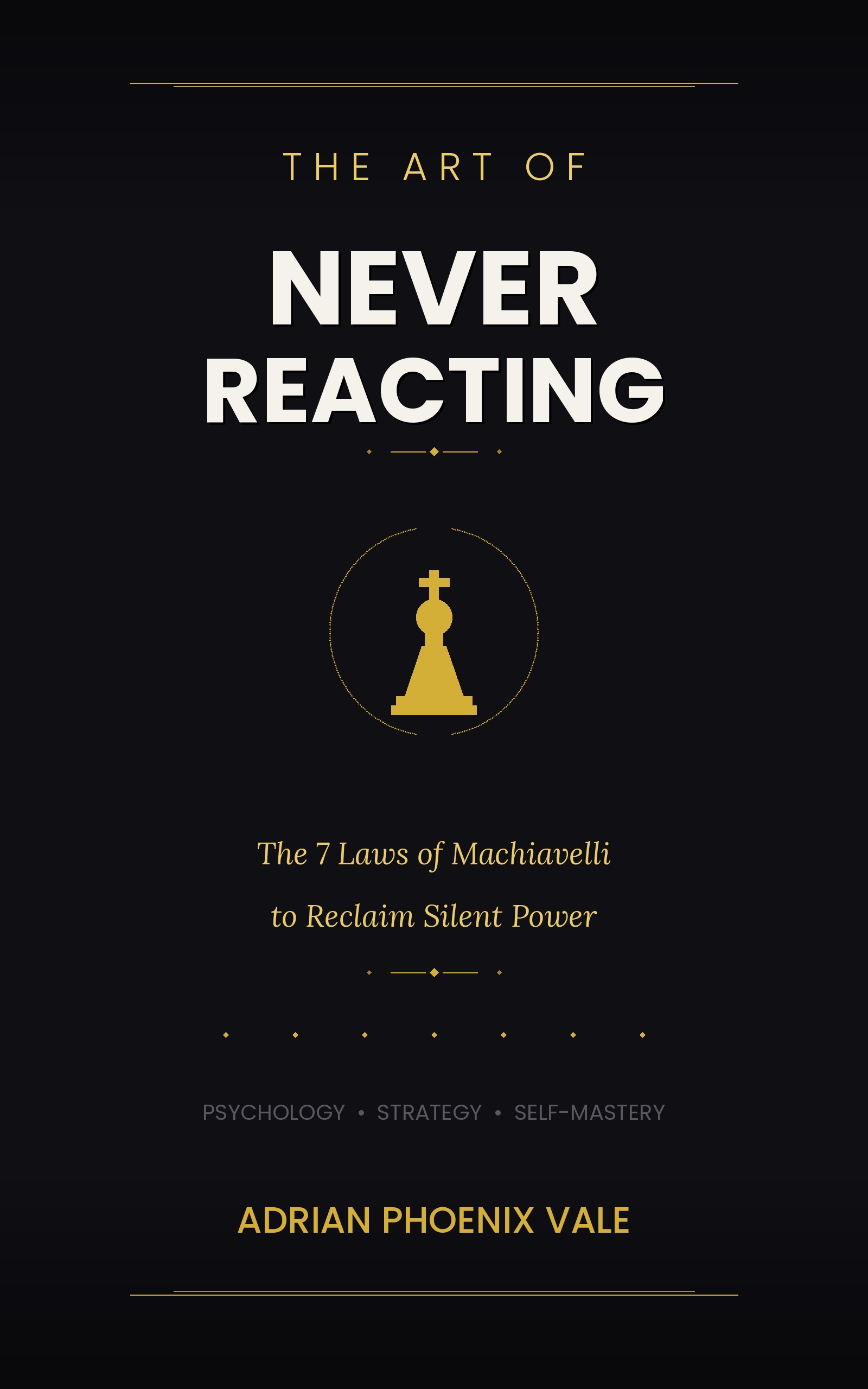
#2. The Art of Never Reacting — Adrian Phoenix Vale
Best for: Translating Machiavelli's strategic framework into daily emotional discipline.
The 7 Laws of Silent Power distill Machiavelli's strategic thinking into a modern system for personal sovereignty. Each law is rooted in historical precedent, validated by contemporary neuroscience, and designed for practical application: at work, in family dynamics, in conflict, and in negotiations.
Why it ranks #2: Bridges the gap between ancient philosophy and modern psychology. Where Meditations gives you the mindset, this book gives you the system.
📄 Pages · 🌐 English · ⭐ Psychology / Strategic Self-Mastery · $4.99 Kindle
>>> Get The Art of Never Reacting on Amazon <<<
#3. The Obstacle Is the Way — Ryan Holiday
Best for: Applying Stoic principles to modern challenges and career setbacks.
Holiday translates Stoic philosophy into a framework for turning obstacles into advantages. Three disciplines — perception, action, and will — are illustrated through historical examples from Rockefeller to Amelia Earhart. Accessible, practical, and directly applicable to business and career.
Why it ranks #3: The book that brought Stoicism to mainstream audiences. If Marcus Aurelius feels too ancient, start here.
📄 224 pages · 🌐 English · ⭐ Philosophy / Applied Stoicism
#4. Mastering Anger Through Stoicism — Adrian Phoenix Vale
Best for: Using Stoic philosophy specifically to disarm anger and emotional triggers.
Manipulators, toxic colleagues, and difficult family members rely on your emotional reactivity — anger, guilt, shame, fear. This book uses Stoic philosophy to build a practical system for emotional self-regulation that no one can weaponize against you.
Why it ranks #4: Fills a specific gap — anger management through a Stoic lens. Not therapy, not suppression — strategic emotional control.
📄 Pages · 🌐 English · ⭐ Psychology / Anger Management · $4.99 Kindle
>>> Get Mastering Anger Through Stoicism <<<
#5. A Guide to the Good Life — William B. Irvine
Best for: A philosopher's structured introduction to practicing Stoicism daily.
Irvine maps out the Stoic toolkit — negative visualization, voluntary discomfort, the dichotomy of control — with academic rigor but practical intent. Each technique comes with exercises you can use immediately.
Why it ranks #5: The best structured introduction available. Where Holiday tells stories, Irvine teaches techniques.
📄 326 pages · 🌐 English · ⭐ Philosophy / Practical Stoicism
#6. The Reckoning — Adrian Phoenix Vale
Best for: Men seeking a no-nonsense framework for emotional resilience.
A direct, practical guide to building emotional strength through accountability, discipline, and strategic self-awareness. Written specifically for men who want to stop reacting and start commanding their inner world — without the softened language of mainstream self-help.
Why it ranks #6: Fills the gap for men who find most emotional intelligence books too indirect. Blunt, practical, and grounded in Stoic principles.
📄 Pages · 🌐 English · ⭐ Self-Help / Men · $9.99 Kindle
#7. Letters from a Stoic — Seneca
Best for: Philosophical depth with practical warmth.
Seneca's letters to Lucilius cover everything from grief to anger to wealth to death — with the warmth and wit of a friend writing to a friend. More accessible than Marcus Aurelius, more personal, and often more practical.
Why it ranks #7: If Meditations is the emperor's journal, this is the philosopher's conversation. Deeper, warmer, and often more immediately useful.
📄 256 pages · 🌐 English · ⭐ Philosophy / Stoicism
#8. The Daily Stoic — Ryan Holiday
Best for: Building a daily Stoic practice one page at a time.
366 days of Stoic wisdom — one meditation per day, with an original quote and a modern interpretation. Not a book to read cover to cover but a companion to keep on your desk.
Why it ranks #8: The most practical format for building a habit. Reading one page a day is achievable even when nothing else is.
📄 400 pages · 🌐 English · ⭐ Philosophy / Daily Practice
#9. Discourses and Selected Writings — Epictetus
Best for: Understanding what you can and cannot control.
Epictetus was a formerly enslaved man who became one of the most influential Stoic teachers. His central insight — that suffering comes from trying to control what is not up to us — is the most practically powerful idea in Stoic philosophy.
Why it ranks #9: The most rigorous of the ancient Stoics. If the dichotomy of control resonates with you, Epictetus is your philosopher.
📄 304 pages · 🌐 English · ⭐ Philosophy / Stoicism
#10. The Psychology of Self-Love — Adrian Phoenix Vale
Best for: Building the internal foundation that makes Stoic practice sustainable.
Stoicism requires a stable sense of self — without it, every Stoic technique is a band-aid on a wound. This book builds the psychological foundation: self-worth independent of external validation, boundaries rooted in self-respect, and emotional resilience that comes from genuine self-knowledge.
Why it ranks #10: The inner work that makes the outer discipline possible. Stoicism tells you what to do; self-love gives you the reason to do it.
📄 Pages · 🌐 English · ⭐ Psychology / Self-Help · $4.99 Kindle
>>> Get The Psychology of Self-Love <<<
How to Use This List
If you are new to Stoicism, start with The Obstacle Is the Way (#3) then Meditations (#1).
If you need immediate anger management, go straight to Mastering Anger Through Stoicism (#4) and The Art of Never Reacting (#2).
If you want a daily practice, get The Daily Stoic (#8) and keep it on your desk.
Frequently Asked Questions
Is Stoicism about suppressing emotions?
No. Stoicism teaches you to observe your emotions clearly, understand their triggers, and choose your response deliberately. The goal is not to feel nothing — it is to stop letting emotions make your decisions for you.
Can Stoicism help with anxiety?
Yes. The Stoic focus on the dichotomy of control — distinguishing what you can influence from what you cannot — directly addresses the core mechanism of anxiety, which is rumination about things outside your control.
Which Stoic philosopher should I start with?
For accessibility, start with Ryan Holiday or William Irvine. For depth, go directly to Marcus Aurelius. For the most practical daily application, Epictetus. For the most human and relatable voice, Seneca.
Also read: