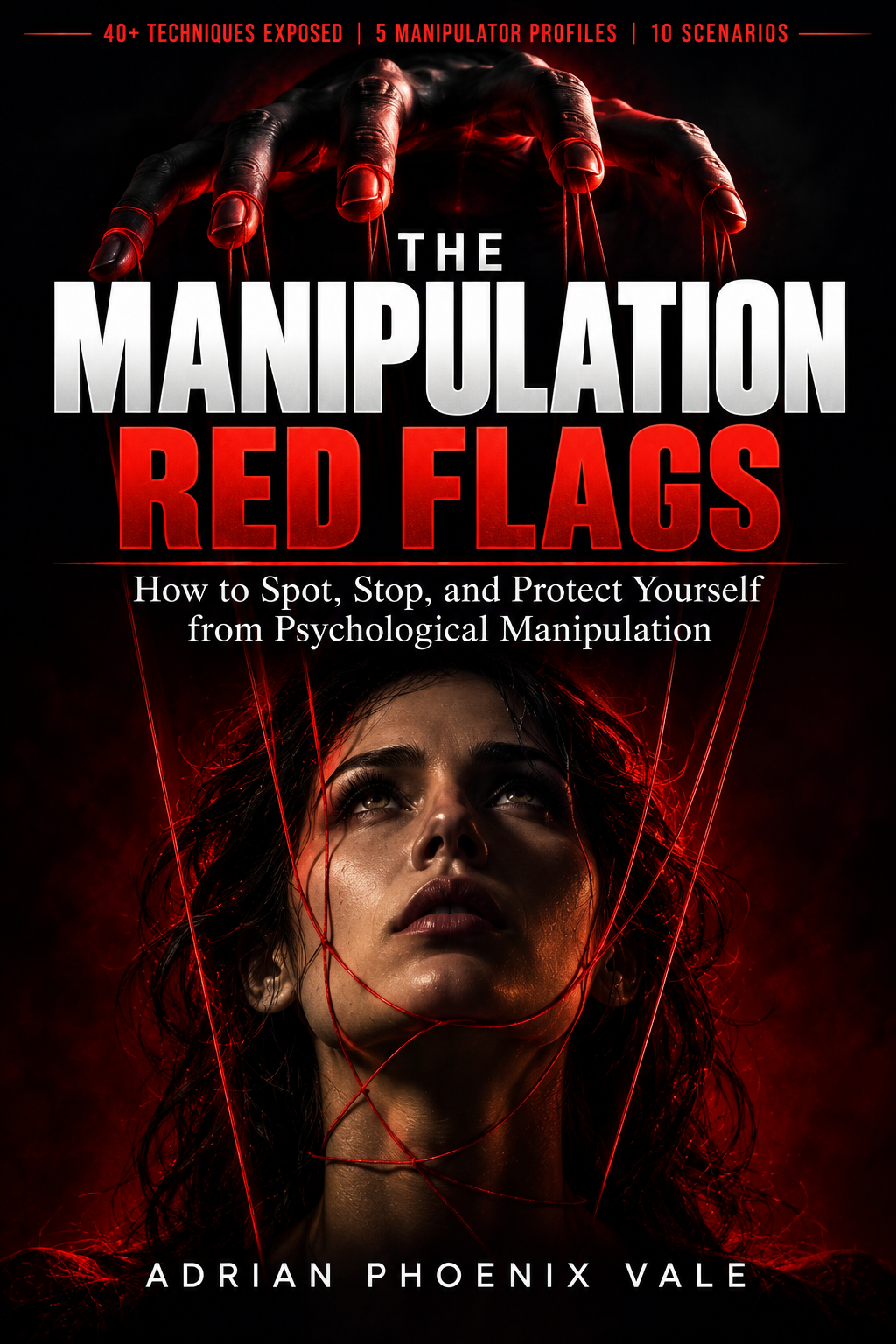
The Manipulation Red Flags - How to Spot, Stop, and Protect Yourself from Psychological Manipulation
A complete, science-backed defense manual against psychological manipulation. 41 red flags with full scientific explanation, 5 manipulator profiles, 6 concrete defense strategies, 10 real-world scenarios, and the neurological literacy to break the cycle at the level where it actually operates.
💡 What you'll learn
The 4-phase manipulation cycle — predict what the manipulator will do before they do it41 red flags across 6 categories: emotional, verbal, social, psychological, power/control, and digital manipulationThe 5 Manipulator Profiles: Narcissist, Passive-Aggressive, Covert Controller, Corporate Manipulator, and Charming PredatorThe 3-element test — distinguish real manipulation from normal human imperfectionThe Gray Rock Method, bulletproof boundary-setting, and the JADE TrapBIFF communication, documentation strategies, and exit planning10 real-world scenarios with detailed case studies and defense playbooksThe neuroscience of vulnerability — oxytocin bonding, dopamine conditioning, and the amygdala hijack
Description
Someone is pulling the strings. This book shows you where the strings are.
You are not crazy. You are not too sensitive. You are not imagining it. If conversations that start with your legitimate concern keep ending with you apologizing — if you feel guilty every time you set a boundary — if someone who says they love you consistently makes you feel small — you are not the problem. You are the target.
The Manipulation Red Flags is a complete, science-backed defense manual against psychological manipulation. It does not teach you how to manipulate others. It teaches you how to see what is being done to you — and how to stop it.
What's Inside
Part One: Foundations — What manipulation actually is (and isn't), why smart people are the most common targets, the neuroscience of vulnerability, and the four-phase manipulation cycle that every toxic relationship follows.
Part Two: The 40+ Red Flags — A comprehensive catalog across six categories: emotional manipulation (gaslighting, love bombing, silent treatment), verbal manipulation (DARVO, word salad, moving goalposts), social manipulation (triangulation, isolation, smear campaigns), psychological manipulation (intermittent reinforcement, learned helplessness, identity erosion), power and control (financial control, strategic incompetence), and digital manipulation (catfishing, breadcrumbing, ghosting cycles).
Part Three: The 5 Manipulator Profiles — The Narcissist, the Passive-Aggressive, the Covert Controller, the Corporate Manipulator, and the Charming Predator. Know who you are dealing with so you can predict what comes next.
Part Four: Defense and Recovery — The Gray Rock Method, bulletproof boundary-setting, the JADE Trap, BIFF communication, documentation strategies, exit planning, and rebuilding after manipulation.
Part Five: 10 Real-World Scenarios — The toxic partner, the manipulative parent, the bully boss, the guilt-tripping friend, the gaslighting colleague, the online scammer, the controlling family member, the sales manipulator, the cult-like group leader, and the co-parent manipulator.
What Makes This Book Different
Most manipulation books tell you what to look for. This book tells you why it works on you — the oxytocin bonding, the dopamine conditioning, the amygdala hijack — and gives you the neurological literacy to break the cycle at the level where it actually operates.
- 41 red flags with full scientific explanation
- 20+ named case studies across every chapter
- 6 concrete defense strategies that work even when your emotions resist
- The 4-phase cycle — predict what the manipulator will do before they do it
- The 3-element test — distinguish real manipulation from normal human imperfection
Anyone who has ever left a conversation feeling confused, guilty, or small — without understanding why. Anyone trapped in a cycle of hope and disappointment with someone who alternates between warmth and cruelty. Anyone who has been told they are "too sensitive" by the person causing the pain. Parents, partners, professionals, and anyone navigating a relationship that feels wrong but looks fine from the outside.