How to Deal with Toxic People Without Losing Your Energy
You know the feeling. You walk into a room feeling fine, and 30 minutes later you're drained, irritated, or second-guessing yourself. Nothing specific happened — but someone's energy just took something from you.
The colleague who always has a crisis. The friend who turns every conversation into a complaint session. The family member who finds the negative angle in everything you share.
Conventional advice says "cut toxic people out of your life." That sounds great in theory — but in practice, the toxic person is often your boss, your mother-in-law, your coworker in the next cubicle, or your child's other parent. You can't always leave. You can learn to stop being drained.
Why Toxic People Drain You (The Real Reason)
Here's the uncomfortable truth: toxic people don't take your energy. You give it to them.
Every time you:
- React emotionally to their provocations
- Try to reason with someone who isn't interested in reason
- Replay conversations in your head for hours afterward
- Adjust your behavior to avoid their reaction
- Feel responsible for their emotional state
...you are voluntarily transferring your mental and emotional energy to someone who will never reciprocate it.
This isn't blame — it's empowerment. If the energy loss is something you're doing, it's also something you can stop doing.
The 5 Energy Protection Strategies
Strategy 1: The Emotional Firewall
An emotional firewall works like its digital equivalent: it allows necessary communication through while blocking harmful content.
How to build it:
Before interacting with a toxic person, set a clear internal intention: "I will respond to the content of what they say, not the emotion behind it."
When they're speaking, listen for the factual content and filter out the emotional manipulation. A toxic coworker who says "Nobody ever helps me around here, I guess I'll just do EVERYTHING myself" is communicating one fact (they want help) wrapped in manipulation (guilt-tripping). Respond to the fact: "What specifically do you need help with?" Ignore the manipulation entirely.
The key insight: You don't have to process their emotional baggage. You can let it pass through you like radio static — acknowledged but not absorbed.
Strategy 2: The Broken Record Technique
Toxic people test boundaries by pushing in slightly different ways each time. The broken record technique makes your boundaries unbreakable.
How it works: Choose your boundary statement and repeat it — calmly, without variation — regardless of their argument, guilt trip, or emotional escalation.
"I'm not comfortable with that." "I understand, but that doesn't work for me." "I've made my decision."
No justification. No explanation. No engagement with their counter-arguments. The same words, the same calm tone, every time.
Why it works: Toxic people are experts at finding cracks in your reasoning. If you give 10 reasons for your boundary, they'll attack all 10. If you give zero reasons and simply repeat your position, there's nothing to attack. The boundary becomes a wall, not a fence.
Strategy 3: Time and Energy Budgets
You wouldn't give someone unlimited access to your bank account. Stop giving them unlimited access to your time and emotional energy.
Set concrete limits:
- Phone calls: 15 minutes maximum, then "I need to go"
- In-person visits: arrive late, leave early, have a hard stop
- Text conversations: respond once, briefly, then stop
- Email: respond within business hours only, with factual content only
The mental energy budget: After interacting with a toxic person, give yourself a maximum of 5 minutes to process the interaction. Set a literal timer. When it rings, you're done thinking about it. Redirect your attention to something productive or pleasant.
This sounds simplistic — but research on rumination (repetitive negative thinking) shows that setting explicit time limits significantly reduces its duration and emotional impact.
Strategy 4: Strategic Detachment
Detachment doesn't mean you stop caring. It means you stop being controlled.
The Stoic framework: Ask yourself three questions after each interaction:
- Was anything they said within my control? If not, it's not worth my energy.
- Will this matter in a year? Most toxic interactions won't matter in a week.
- Is their behavior about me, or about them? Almost always, it's about them.
The observer shift: Instead of experiencing the interaction as a participant, observe it as a researcher. "Interesting — she's using guilt to try to change my mind." "He's escalating because my calm response isn't giving him what he expected."
This perspective shift — from player to observer — immediately reduces emotional impact because you're analyzing the dynamic rather than being caught in it.
Strategy 5: The Energy Recovery Protocol
Even with the best strategies, some interactions will drain you. Having a recovery protocol prevents the drain from carrying into the rest of your day.
Immediate recovery (0-5 minutes after):
- 3 deep breaths (exhale longer than inhale)
- Physical movement — walk, stretch, change rooms
- One sentence to yourself: "That was their problem, not mine"
Short-term recovery (within 1 hour):
- Do something that fills your energy: music, a walk outside, a conversation with someone who lifts you up
- Write down what happened in 2-3 factual sentences (externalizing it removes it from your mental loop)
Long-term recovery (ongoing):
- Invest in relationships that energize you
- Build a daily practice that strengthens your emotional resilience (meditation, journaling, exercise)
- Recognize and celebrate each time you successfully maintained your calm
The Situations You'll Face
The Chronic Complainer: Redirect with "What are you going to do about it?" Complainers want an audience, not a solution. The question shifts the dynamic from passive venting to active problem-solving — and most chronic complainers will change the subject.
The Energy Vampire: These are the people who leave you exhausted without any obvious conflict. Set time limits (Strategy 3) and notice whether the relationship is ever reciprocal. If you're always the listener, supporter, and problem-solver and they never ask about your life — it's not a friendship. It's unpaid emotional labor.
The Passive-Aggressive Colleague: Name the behavior, calmly. "It seems like something is bothering you. Would you like to discuss it directly?" Passive aggression only works in the shadows. Direct sunlight kills it.
The Narcissistic Family Member: Grey rock technique — bland, uninteresting, unresponsive. The narcissist feeds on drama. Deny them drama and they lose interest. Keep answers short, neutral, and boring.
When Boundaries Aren't Enough
Sometimes the healthiest response is to reduce contact dramatically or end the relationship entirely. This isn't failure — it's the ultimate boundary.
Signs that the situation has moved beyond boundary management:
- Your physical health is affected (insomnia, headaches, digestive issues tied to the relationship)
- You dread every interaction
- The person consistently violates boundaries despite clear communication
- You've lost touch with your own identity or preferences
A therapist specializing in toxic relationships can help you evaluate whether the relationship is manageable or whether it's time to exit safely.
Also read:
- How to Stay Calm When Someone Disrespects You: The Stoic Method
- Machiavelli's 7 Laws of Power That Most People Learn Too Late
- 41 Signs of Manipulation in Relationships: The Red Flags Most People Miss
Build Your Complete Emotional Defense System
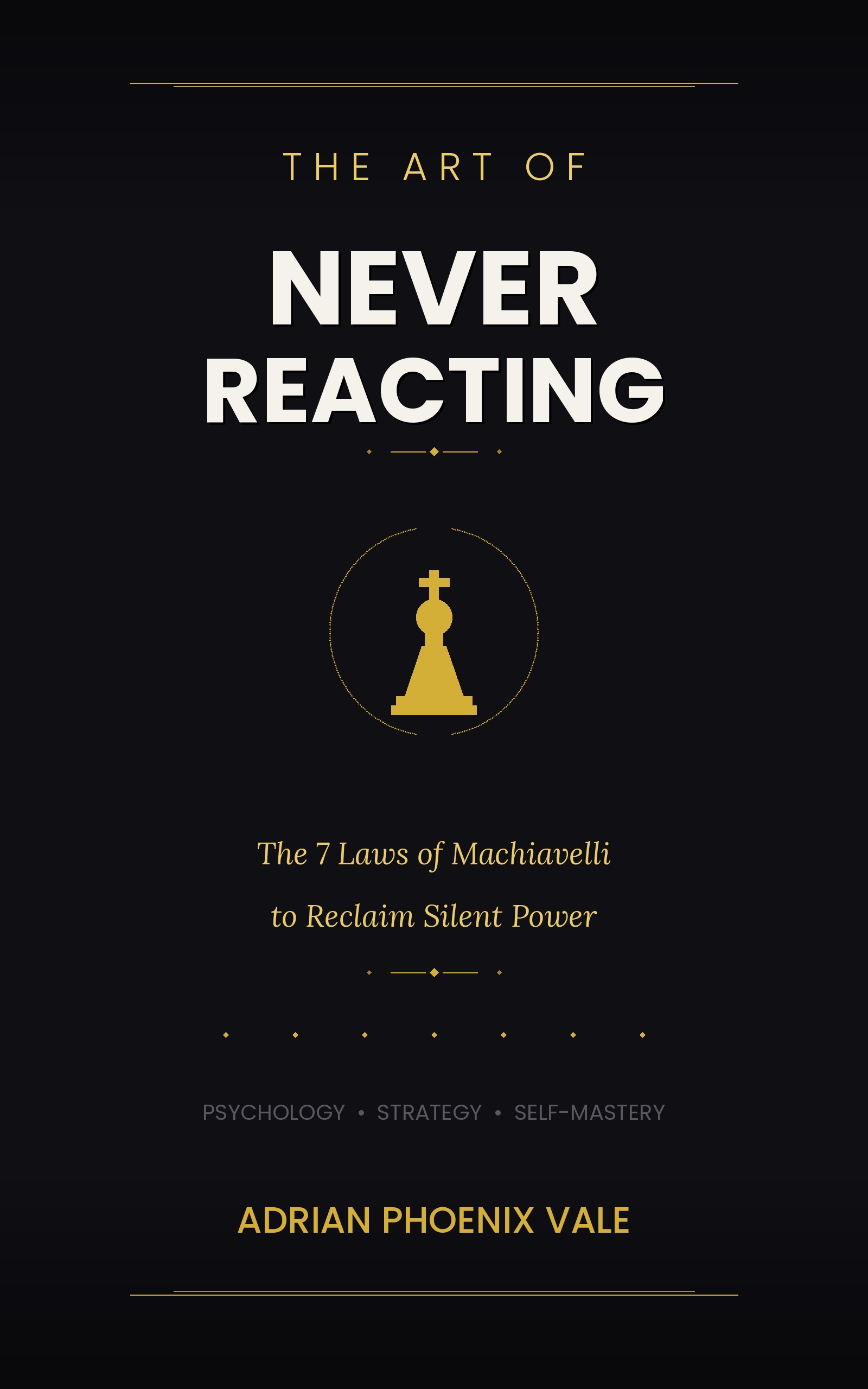
Dealing with toxic people requires more than tips — it requires a system for emotional mastery. "The Art of Never Reacting: The 7 Laws of Machiavelli to Reclaim Silent Power" by Adrian Phoenix Vale gives you that system: 7 Laws of strategic composure, neuroscience-backed exercises for rewiring reactivity, and a 30-Day Program that transforms emotional control from a struggle into a skill.