The Grey Rock Method: How to Become Invisible to Manipulative People
You can't always leave a toxic relationship. The manipulator is your boss, your coparent, your sibling, your neighbor. Cutting contact isn't an option — but continuing to be their emotional supply is destroying you.
The Grey Rock Method offers a third path: make yourself so uninteresting that the manipulator stops targeting you.
It sounds almost too simple. But therapists specializing in narcissistic abuse have called it one of the most effective self-protection strategies available — precisely because it attacks the one thing every manipulator needs: your reaction.
What Is the Grey Rock Method?
The Grey Rock Method is a communication strategy where you present yourself as emotionally flat, boring, and unreactive — like a grey rock in a field of colorful stones. No drama. No engagement. No emotional charge.
The name captures the core principle: a grey rock doesn't attract attention. It doesn't respond when kicked. It doesn't change color when yelled at. It just sits there, being utterly uninteresting.
The method was first described by a blogger using the pseudonym "Skylar" who developed it after years of dealing with a psychopathic partner. It has since been adopted by therapists, psychologists, and abuse recovery specialists worldwide.
Why the Grey Rock Method Works
Manipulators — narcissists, sociopaths, toxic coworkers, controlling partners — operate on a simple fuel source: your emotional reaction. Psychologists call this "narcissistic supply."
When you react emotionally — with anger, tears, frustration, defensiveness, or even excessive friendliness — you are providing exactly what the manipulator is looking for. Your reaction confirms their power over you. It gives them information about your vulnerabilities. It feeds their need for drama and control.
The Grey Rock Method cuts off this supply. When your responses become bland, predictable, and emotionally flat, the manipulator receives nothing of value from the interaction. No drama, no information, no confirmation of power. Over time, most manipulators will redirect their attention to easier targets — people who still provide the emotional reactions they crave.
This isn't a theory. It's a behavior pattern observed repeatedly in clinical settings and abuse recovery communities. The manipulator doesn't stop being manipulative — they just stop targeting you because you've become a poor return on investment.
The 5 Steps to Becoming a Grey Rock
Step 1: Eliminate Emotional Disclosure
Stop sharing your feelings, opinions, dreams, fears, or frustrations with the manipulative person. Every piece of emotional information is ammunition.
Before Grey Rock: "I'm so stressed about the presentation on Friday — I barely slept last night." Grey Rock version: "Things are fine."
This isn't about lying. It's about reducing the emotional bandwidth of the conversation to near zero. You're not hiding — you're simply choosing not to perform for someone who will use the performance against you.
Step 2: Keep Responses Short and Factual
Answer questions with the minimum amount of information required. No elaboration. No stories. No context that isn't strictly necessary.
Before Grey Rock: "Oh, we went to that new Italian place downtown — it was amazing, the pasta was incredible, and we ran into Sarah who just got back from…" Grey Rock version: "We went to dinner. It was good."
The goal is to make conversations with you so unrewarding that the manipulator stops initiating them. Every interesting detail you provide is a thread they can pull.
Step 3: Flatten Your Body Language
Manipulators read body language like professional poker players read tells. They notice when your jaw tightens, when you shift in your chair, when your eyes widen.
Grey Rock body language:
- Relaxed posture — not tense, not defensive
- Neutral facial expression — not angry, not hurt, not excited
- Steady eye contact — not avoidant, not aggressive
- Calm, even vocal tone — no peaks, no valleys
- Slow, deliberate movements — no fidgeting, no rushing
This takes practice. Your body will want to react even when your words don't. The more you practice physical neutrality, the more natural it becomes.
Step 4: Redirect Conversations to Mundane Topics
When a manipulator tries to escalate, steer the conversation toward the most boring subject available.
Manipulator: "I noticed you've been spending a lot of time with your friend lately. What exactly are you two doing?" Grey Rock redirect: "Not much. Hey, did you see they're doing road construction on Main Street? It's going to be a mess for weeks."
Weather. Traffic. Grocery prices. Home maintenance. The more mundane, the better. These topics provide nothing for the manipulator to work with — no jealousy to exploit, no insecurity to probe, no conflict to escalate.
Step 5: Never JADE (Justify, Argue, Defend, Explain)
JADE is the acronym therapists use for the four behaviors that keep you trapped in manipulative dynamics:
- Justify: "I did it because…"
- Argue: "That's not true, actually…"
- Defend: "I'm not like that, I'm…"
- Explain: "What happened was…"
Every JADE response opens a new front for the manipulator to attack. When you justify, they question your justification. When you argue, they escalate the argument. When you defend, they find new accusations. When you explain, they distort your explanation.
Grey Rock alternative: "OK." "I understand you feel that way." "I'll think about it." Then silence.
When to Use Grey Rock (And When Not To)
Best Applications
Coparenting with a narcissistic ex: Keep all communication factual, brief, and focused on the children. No emotional disclosure, no engagement with provocations, no JADE responses.
Toxic workplace dynamics: When a colleague or supervisor uses manipulation tactics, Grey Rock protects your professional composure while denying them the reactions they seek. Combine with thorough documentation.
Family gatherings: When you can't avoid a manipulative family member, Grey Rock gets you through the event without providing fuel for weeks of post-gathering drama.
The transition period: When you're planning to exit a relationship but aren't ready yet, Grey Rock reduces conflict while you prepare.
When Grey Rock Is NOT Appropriate
When physical safety is at risk. If a manipulator becomes physically violent, Grey Rock is not sufficient. Safety planning with a professional takes priority.
With children and dependents. Grey Rock is a strategy for adult interactions. Children need emotional engagement, not emotional flatness.
In healthy relationships experiencing conflict. If your partner is not manipulative but you're using Grey Rock to avoid legitimate communication, you're weaponizing a defense mechanism. Normal conflict requires engagement, not avoidance.
Long-term as your only strategy. Grey Rock is a tactical tool, not a lifestyle. If you need to Grey Rock someone indefinitely, the deeper question is whether this relationship should exist at all.
Common Mistakes
Going too far too fast. A sudden personality shift alerts the manipulator that something has changed. They may escalate before eventually disengaging. Gradual Grey Rocking — slightly less interesting each week — is safer.
Breaking character during escalation. The manipulator will test your Grey Rock by intensifying provocation. The first few tests are the hardest. If you break — if you react even once — you've taught them that enough pressure cracks your composure, and they'll apply more pressure next time.
Confusing Grey Rock with the Silent Treatment. Grey Rock is not about punishing with silence. It's about reducing emotional content. You still respond. You still communicate. You're just boring about it.
Feeling guilty. Many people — especially those conditioned by manipulative relationships — feel guilty about denying someone an emotional reaction. This guilt is part of the conditioning. Protecting your emotional energy is not cruelty. It's self-preservation.
The Deeper Principle: Reactivity Is Vulnerability
The Grey Rock Method works because it's built on a universal truth: people who can provoke your emotions can control your behavior. Every emotional reaction is a transfer of power from you to the person who triggered it.
This principle extends far beyond dealing with manipulators. In negotiations, the person who stays calm holds the advantage. In workplace conflicts, the composed person is perceived as more competent. In personal relationships, the partner who doesn't react to every provocation creates space for genuine communication rather than defensive combat.
Mastering non-reactivity isn't about becoming cold. It's about choosing — deliberately, strategically — when and how to invest your emotional energy.
Also read:
- How to Deal with Toxic People Without Losing Your Energy
- How to Stay Calm When Someone Disrespects You: The Stoic Method
- Machiavelli's 7 Laws of Power That Most People Learn Too Late
Build Your Complete Non-Reactivity System
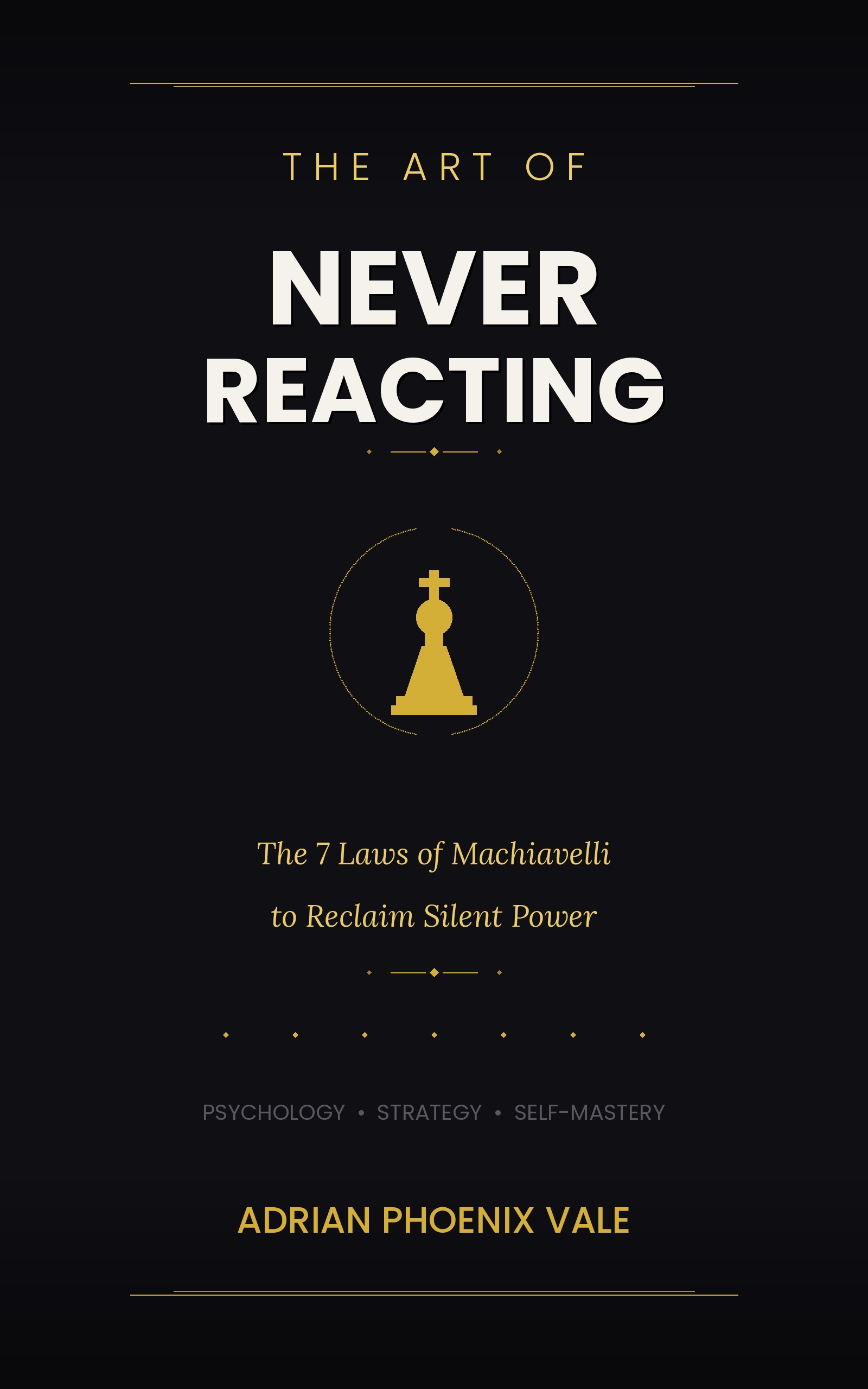
The Grey Rock Method is one powerful technique in a larger toolkit. "The Art of Never Reacting: The 7 Laws of Machiavelli to Reclaim Silent Power" by Adrian Phoenix Vale builds a complete system for emotional mastery — from the neuroscience of reactivity to the strategic principles of Machiavelli, with a 30-Day Program that transforms composure from effort into instinct.