
How Abdominal Breathing Calms the Nervous System
(And Why It Works Better Than Most Stress Techniques)
Chronic stress rarely comes from the mind alone.
It comes from a nervous system that has forgotten how to switch off.
Many people try to relax by thinking differently, distracting themselves, or pushing through fatigue. Yet their bodies remain tense, alert, and restless—sometimes even during rest or sleep.
What if calm wasn’t something you had to force…
but something your body already knows how to access?
This is where abdominal breathing becomes one of the most effective and overlooked tools for nervous system regulation.
Why Your Nervous System Stays in Alert Mode
Your nervous system is designed to protect you.
When it perceives danger—real or imagined—it activates alert mode (the sympathetic nervous system).
In modern life, this mode is triggered by:
constant mental stimulation
deadlines and pressure
emotional overload
lack of true recovery
The result?
shallow breathing
muscle tension
racing thoughts
difficulty sleeping
a feeling of being “on edge”
Over time, the body stops returning naturally to calm.
Why Thinking Alone Doesn’t Calm the Body
A common mistake is trying to calm stress mentally.
But the nervous system doesn’t respond to logic.
It responds to physical signals of safety.
And one of the strongest signals your body understands is breathing.
Not fast breathing.
Not forced breathing.
But slow, gentle, abdominal breathing.
What Is Abdominal Breathing, Really?
Abdominal breathing is not a performance or a relaxation trick.
It is a functional breathing pattern that:
allows the diaphragm to move freely
stimulates the vagus nerve
activates the parasympathetic (calm) system
When you breathe slowly with the abdomen:
the brain receives a message of safety
heart rate slows
muscle tension decreases
mental agitation eases
This is not suggestion.
It is physiology.
Why Abdominal Breathing Works Better Than Most Techniques
Many stress techniques focus on control:
controlling thoughts
controlling emotions
controlling outcomes
Abdominal breathing works because it does the opposite.
It allows regulation instead of forcing it.
This is why it is often effective even when:
meditation feels difficult
relaxation techniques feel frustrating
the mind won’t slow down
The body calms first.
The mind follows.
When Abdominal Breathing Is Most Effective
Abdominal breathing is not reserved for emergencies.
It is most powerful when used before stress escalates.
It can be applied:
during daily tension
before sleep
when anxiety rises
during emotional moments
after mental or physical effort
With repetition, calm becomes more accessible—even automatic.
A Practical Guide to Learn Abdominal Breathing Properly
While abdominal breathing seems simple, many people struggle because:
they force the breath
they expect instant results
they focus too much on technique
Learning it properly requires a gentle, structured approach.
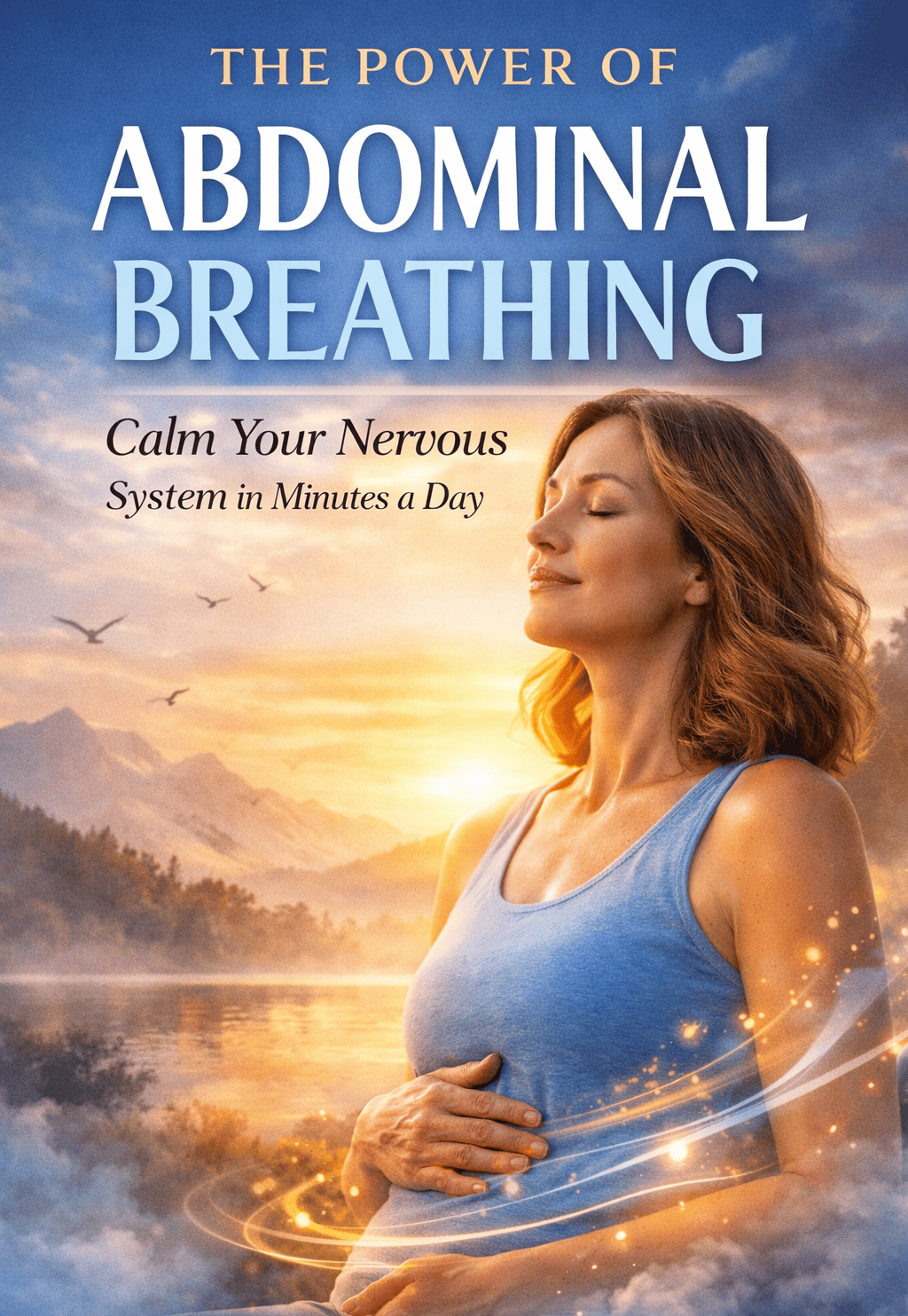
That’s exactly what The Power of Abdominal Breathing guide provides.
👉 You can access the full practical guide here:
The Power of Abdominal Breathing : A Practical Guide to Calm Your Nervous System Naturally
What Makes This Guide Different
This is not a generic breathing ebook.
It is built around:
nervous system education (without jargon)
a clear step-by-step breathing method
a 7-day practical program
real-life applications (stress, anxiety, sleep, tension)
short routines you can use immediately
The focus is not on “relaxing harder”
but on retraining the nervous system gently.
What You’ll Learn Inside the Guide
How the nervous system actually works
Why your body stays tense even at rest
The exact breathing rhythm that activates calm
How to practice without effort or control
How to integrate breathing into daily life
How to use breathing for sleep and emotional regulation
It also includes practical bonus routines you can use in just a few minutes.
👉 Discover the full guide here:
The Power of Abdominal Breathing : A Practical Guide to Calm Your Nervous System Naturally
Is Abdominal Breathing Safe?
Yes.
When practiced slowly and without forcing:
it is gentle
it respects the body
it does not override natural signals
The guide emphasizes listening to the body, not pushing it.
This makes it suitable for beginners and for people who feel overwhelmed by other techniques.
Calm Is Not Something You Add — It’s Something You Relearn
Most people don’t lack calm.
They lack access to it.
Abdominal breathing does not create calm artificially.
It removes the barriers that block it.
With practice, the body remembers how to return to balance—again and again.
Start Rebuilding Calm at Your Own Pace
If you’re looking for:
a natural way to calm your nervous system
a method grounded in physiology
a practical guide you can apply daily
Then The Power of Abdominal Breathing offers a clear and respectful path forward.
👉 Access the full guide here:
The Power of Abdominal Breathing : A Practical Guide to Calm Your Nervous System Naturally
Final Thought
You don’t need to become someone else to feel calmer.
You just need to give your body the right signals.
And sometimes,
that starts with a single slow breath.