
High-Functioning Burnout:
Why You’re Still Performing While Quietly Collapsing Inside
You are not failing.
You are still showing up.
Still delivering.
Still functioning.
And yet, something inside is eroding.
This state has a name.
It is not motivation loss.
It is not weakness.
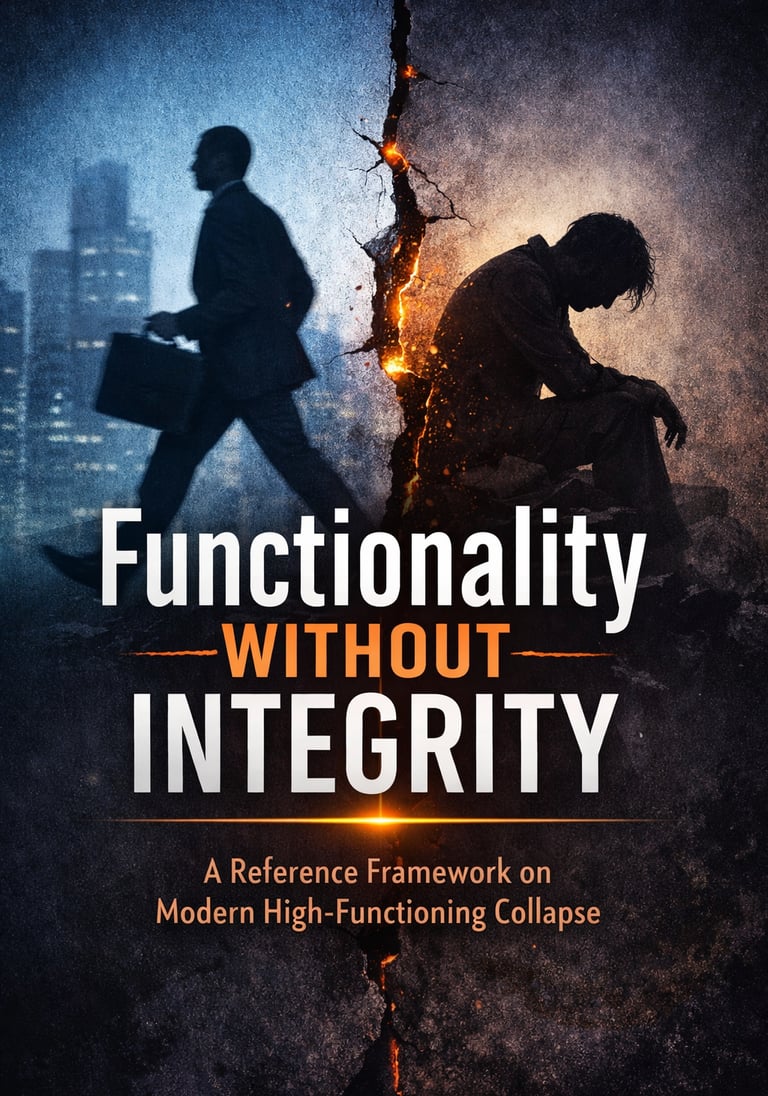
It is high-functioning burnout — a condition where performance survives while integrity collapses.
This article explains why this happens, why it is systemically rewarded, and why most burnout advice fails the people who need it most.
High-Functioning Burnout Is Not a Breakdown Problem
Most burnout narratives focus on collapse.
They describe exhaustion after someone stops working, gets sick, or breaks down. But the fastest-growing group of people searching for answers are not collapsing.
They are still working.
Search intent reflects this clearly:
high functioning burnout
burnout but still working
successful but miserable
exhausted but productive
burnout without breakdown
These people are invisible in most frameworks.
Because as long as output continues, distress is dismissed.
Functioning Is Not Health
Modern culture equates health with continuity.
If you can still function:
you are assumed to be fine
your distress is framed as stress
your exhaustion is normalized
But functioning is not health.
Functioning simply means your nervous system is still compensating.
In high-functioning burnout, the system adapts by:
suppressing internal signals
dissociating from fatigue and emotion
using anxiety as fuel
This allows performance to continue — at a growing internal cost.
Why High-Functioning Anxiety Is Often Praised
High-functioning anxiety is rarely treated as a problem.
In professional and social systems, it looks like:
vigilance
reliability
responsiveness
emotional control
Anxiety becomes a regulatory mechanism.
It keeps people alert, available, and productive in environments where slowing down would threaten:
income
belonging
relevance
This is why many people feel worse when they try to relax.
Calm reduces urgency.
Urgency has become safety.
Burnout Without Collapse: The Most Dangerous Form
The most damaging burnout is not dramatic.
It is silent.
You don’t stop.
You don’t fall apart.
You just lose signal.
Common experiences include:
feeling tired but unable to rest
emotional numbness
difficulty sensing limits
constant internal pressure without clear threat
This is delayed collapse.
Not avoided.
Postponed.
Eventually, the system fails — suddenly and disproportionately — because damage has accumulated without interruption.
Why Coping Strategies Often Make It Worse
Most burnout advice focuses on coping:
breathing techniques
mindset reframing
stress management
productivity balance
These approaches assume the problem is insufficient regulation.
But in high-functioning burnout, the problem is not coping failure.
It is over-adaptation.
Coping often allows people to tolerate environments that are already violating internal coherence.
The result:
better endurance
delayed breakdown
deeper fragmentation
Coping optimizes survival.
It does not restore integrity.
Performance-Based Belonging: The Hidden Driver
A key factor rarely named is performance-based belonging.
In many modern systems, safety and inclusion are conditional.
You belong because you are useful.
You are valued because you perform.
You feel secure because you are needed.
This trains the nervous system to associate:
slowing down with danger
rest with loss
boundaries with risk
High-functioning burnout is not a motivation issue.
It is a belonging regulation issue.
Why Insight Alone Doesn’t Heal Burnout
Many high-functioning individuals understand their patterns perfectly.
They know:
where their anxiety comes from
why they overwork
how their nervous system operates
And yet nothing shifts.
Insight does not create safety.
As long as the external structure still requires performance to remain secure, the nervous system will not stand down.
This is why therapy and self-awareness often stall at the same point.
The Missing Framework
What has been missing is not more advice.
It is a framework that explains:
why functionality can survive while integrity collapses
why anxiety becomes fuel rather than dysfunction
why coping delays rather than prevents burnout
why collapse often comes “out of nowhere”
This gap is exactly what Functionality Without Integrity addresses.
👉 You can explore the full reference framework here:
High-Functioning Burnout: Why You’re Still Performing While Quietly Collapsing Inside
This is not a burnout guide.
It is a language for what was never named.
Functioning Without Self-Violence
Recovery does not require quitting life, rejecting ambition, or disappearing.
It requires ending self-violence — the repeated act of overriding internal signals to remain acceptable.
When integrity is restored:
anxiety loses its regulatory role
functioning becomes selective, not compulsive
rest no longer feels dangerous
Collapse is no longer needed as a boundary.
If This Article Feels Uncomfortable, That’s the Point
High-functioning burnout persists because it feels normal.
This article challenges that normalization.
If you recognized yourself here — still functioning, still reliable, but internally fractured — the issue is not resilience.
It is misalignment.
And misalignment does not require optimization.
It requires clarity.
👉 The complete framework, assessment tools, and reference glossary are available here:
High-Functioning Burnout: Why You’re Still Performing While Quietly Collapsing Inside
Final Thought
Burnout is not always about doing too much.
Sometimes, it’s about surviving too well
in conditions that were never neutral.
Functioning without integrity is not health.